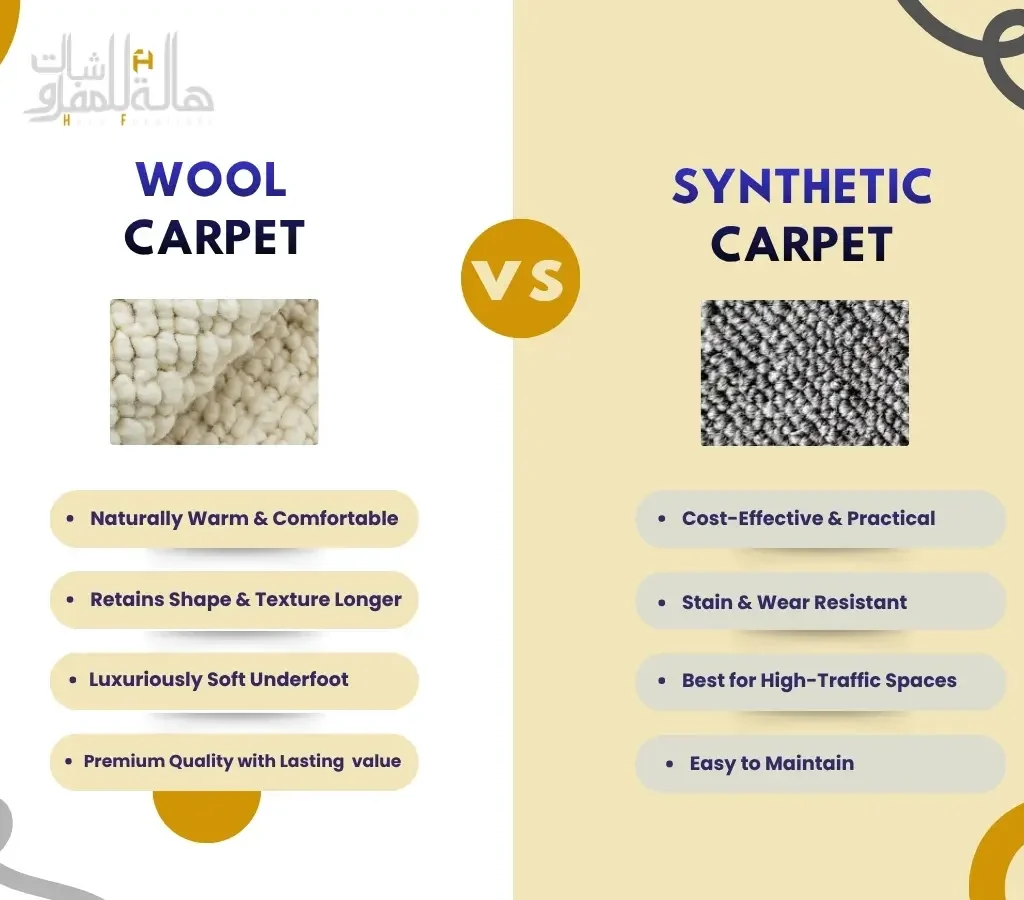
Choosing a carpet for a Dubai home is rarely as simple as picking the one that feels soft in the showroom. Air conditioning runs for most of the year, fine desert dust settles into every room, and the local climate puts different demands on carpet than many people expect. At Hala Furniture Trading, one of the questions we hear most is whether wool or synthetic carpet is the better choice.
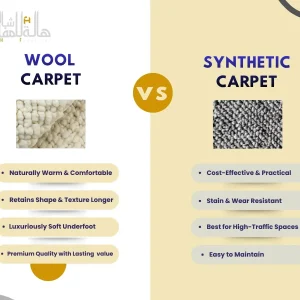
The honest answer depends on your budget, the room, and how you use it. Wool offers outstanding comfort and long-term durability, while synthetic carpets usually cost less and cope better with moisture and everyday maintenance. This guide explains the differences, compares the main carpet fibres, and helps you choose the right option for your home in Dubai and across the UAE.
Why This Decision Is Trickier Here Than Almost Anywhere Else
Most carpet buying guides are written for cooler climates. Dubai is different. Air conditioning runs for much of the year, outdoor heat is extreme, and fine desert dust finds its way indoors every day.
Those conditions affect how a carpet looks and performs over time. Some fibres hold their shape better under constant foot traffic. Others cope better with moisture, sunlight, or regular cleaning. Choosing the right material from the start makes a noticeable difference to how long the carpet lasts and how easy it is to maintain.
What Wool Carpet Actually Is
Wool carpet is made from natural sheep’s fleece. It has been used in homes for generations because it combines comfort, durability, and a long service life. Each wool fibre has a natural crimp that acts like a small spring. After being compressed by foot traffic or furniture, the fibres gradually recover their shape instead of staying flat. That is one of the main reasons a quality wool carpet can continue looking good for 15 to 20 years with proper care.
Wool is also naturally flame-resistant and helps hide light soiling between routine cleaning. These qualities make it a popular choice for bedrooms, living rooms, and other areas where comfort matters as much as appearance.
Understanding Synthetic Carpet Types
Synthetic carpet is made from different man-made fibres, and each one performs differently. Some are built for heavy foot traffic, some focus on comfort, while others handle moisture better. Knowing the difference makes it much easier to choose the right carpet for your home.
Nylon
Nylon is the toughest synthetic carpet fibre. It recovers well after heavy foot traffic, holds its colour, and wears slowly over time. That makes it a reliable choice for busy living rooms, hallways, and staircases.
Polyester
Polyester feels soft underfoot and comes in rich, vibrant colours. It also resists most household stains well. Its main weakness is fibre recovery. Heavy furniture and constant foot traffic leave marks more easily than they do on nylon, so polyester is better suited to bedrooms than busy hallways.
Polypropylene (Olefin)
Polypropylene absorbs very little moisture, making it a practical choice for rooms where humidity is more common. It is also one of the most affordable carpet fibres. However, it is less resilient than nylon and can flatten sooner in busy areas.
Wool-Nylon Blend
A wool-nylon blend combines the comfort of wool with the added durability of nylon. Most blends contain around 80% wool and 20% nylon. They cost less than pure wool, last longer than many synthetic carpets, and remain one of the most popular choices for family homes in Dubai.
Wool vs Synthetic Carpet: Side-by-Side Comparison
Choosing between wool and synthetic carpet comes down to how you live, how much you want to spend, and what you expect from the floor. Looking at each feature side by side makes the choice much easier.
Comfort Underfoot
Wool feels softer and more comfortable underfoot throughout the year. It naturally regulates temperature, so it stays comfortable in both air-conditioned rooms and warmer months. Among synthetic carpets, polyester feels the softest, while nylon and polypropylene feel firmer.
Durability
Both wool and nylon are built for long-term use. A quality wool carpet can last 15 to 20 years with proper care, while nylon commonly lasts 10 to 15 years. Polyester and polypropylene usually have a shorter service life in busy areas.
Cleaning and Maintenance
Synthetic carpets are usually easier to clean after everyday spills. Wool naturally resists dirt, but it needs more care if stains are left to settle.
Sunlight
Strong sunlight affects every carpet over time. Solution-dyed nylon and polypropylene usually hold their colour better than wool in rooms with large windows or in rooms with afternoon sun.
Moisture
Polypropylene absorbs very little moisture, making it well suited to humid areas. Wool performs well in normal indoor conditions but is less suitable where dampness is common.
Price
Price is often the deciding factor. In Dubai, quality wool carpet usually starts from AED 220–250 per sqm supplied and installed. Nylon generally starts from AED 140–160, polyester from AED 90–140, and polypropylene from AED 70–110 per sqm.
Where Wool Works Best, and Where Synthetic Makes More Sense
Every room is used differently, so one carpet won’t suit every space. A material that works well in a busy hallway may not be the best choice for a bedroom, and vice versa.
- Living Rooms: Choose wool or a wool-nylon blend if comfort is the priority. For busy family homes with children or pets, nylon is usually the more practical choice.
- Bedrooms: Wool gives the softest feel underfoot, making it a popular bedroom choice. Polyester is a good option for guest bedrooms where foot traffic stays light.
- Hallways and Staircase: Nylon is usually the best choice because it handles constant foot traffic better than other synthetic fibres.
- Rental Properties: Polypropylene and polyester keep the upfront cost lower while remaining easy to maintain, making them practical choices for rental homes.
- Luxury Villas: Wool remains the preferred choice for homeowners who want long-term comfort, natural fibres, and a premium finish.
If you’re still unsure, compare the rooms you use the most rather than the size of the property. The right carpet is the one that suits your daily routine, not just your budget.